
What if the real problem with talent systems isn’t technology but the mindset behind them?
Most organizations continue to treat talent as an inventory: profiles captured, categorized, and left dormant until a requisition opens. The result is a large database that appears impressive on paper but rarely functions like a living, responsive ecosystem.
Spotify built loyalty differently. Take Discover Weekly—a playlist rebuilt every Monday based on individual listening behavior. No two users receive the same list/recommendations. No list is sent on a fixed schedule. It fires when the signal says so, because the data knows what you want before you do. Spotify never treated its listeners as static profiles. It responds to behavior, learns in real-time, and stays relevant through continuous, personalized engagement.
That same shift is reshaping how forward-looking organizations view talent—not as a database to manage, but as dynamic, event-driven talent communities to engage.
Why Databases Don’t Create Belonging—And What Actually Does
Most talent pools are built on a fundamental misunderstanding: Collect resumes, tag profiles, and search when a new position opens. However, storing candidate data is not remotely equivalent to engaging them. After all, databases don’t create relationships; they simply store records. Talent communities build engagement.
Belonging is built through continuity, interaction, and trust. Resumes are static records; relationships are dynamic. Yet most organizations treat candidates like ‘entries’ in a system—only reaching out when there’s a role to fill, making the relationship transactional, not mutual. Without consistent touchpoints, candidates don’t experience continuity. Neither do they feel recognized for their strengths, nor do they feel like they belong to an ecosystem because nothing in the journey signals that they matter beyond the job vacancy.
If belonging is the end goal, candidate engagement must become the operating model—not an exception.
Event-Driven Engagement vs. Batch-and-Blast Marketing
Batch-and-Blast Approach
The traditional candidate relationship management often borrows the “batch-and-blast” approach from an old school marketing playbook.

Build a static email list of “candidates”

Send generic campaigns to the entire list

Wait for response/engagement

Repeat like a recurring calendar event

Operate without context, personalization, or timing
Figure 1: The Traditional Batch-and-Blast Approach
A candidate who applies for a job today is unlikely to share the same mindset as someone updating a profile after months. Yet both the candidates receive the same message. In such a case, the predictable outcome is disengagement—not from lack of interest, but from mistimed relevance.
This model treats candidates like products in a catalog. However, talent communities do not behave like marketing audience. Campaign logic sells products; it doesn’t earn human attention.
Why the Marketing Approach Doesn’t Work for Talent
Talent journeys don’t follow marketing calendars. They are triggered by moments: decisions, actions, and shifts in circumstances. Sending the same message to all the candidates irrespective of where they are in their journey ignores the context entirely.
The consequences are predictable:
- Messages feel irrelevant and impersonal
- Candidates disengage or ignore outreach
- Timing rarely matches intent
- Opportunities go unnoticed
In short, the system talks at candidates, not with them.
This is where Spotify offers a useful analogy. Spotify doesn’t send blanket recommendations on a schedule; it responds to behavior. Modern candidate engagement should follow a similar trajectory, triggered in real time, not scheduled in batches.
Event-Driven Candidate Engagement: A Smarter Model
In modern talent communities, Spotify-inspired approach replaces campaigns with events.
Instead of asking,
“When should we send this message?”
The system asks,
“What just happened that matters?”
What if engagement was triggered NOT by your schedule, but by the candidate’s moment of truth?
That’s event-driven candidate engagement.
Rather than relying on static lists and scheduled campaigns, it acts on real-time signals. Those are the events that indicate where a candidate is in the journey and what to do next.
What Qualifies as an Event?

Candidate Actions: Apply, update a profile, refer someone

Hiring Milestones: Screening, interview scheduling, offer

Time-based Triggers: Assignment start, assignment nearing completion

Behavioral Signals: Logins, job browsing, application patterns
Figure 2: Events that Trigger Meaningful Candidate Engagement
Events are not administrative data points—they are signals of intent and context. Each moment is meaning and a chance to engage with precision: timely, relevant, and personal.
What Event-Driven Talent Engagement Looks Like
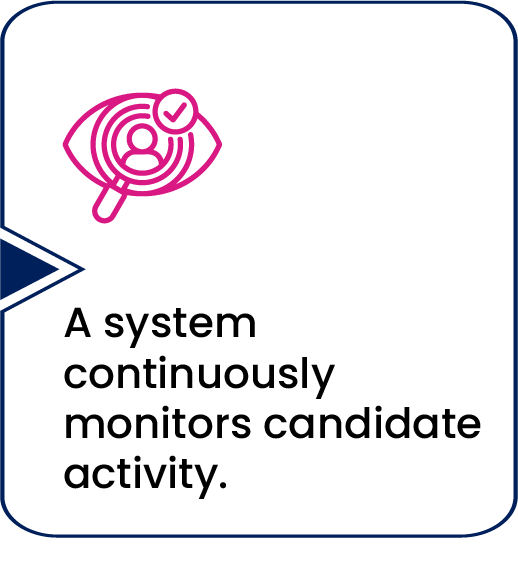
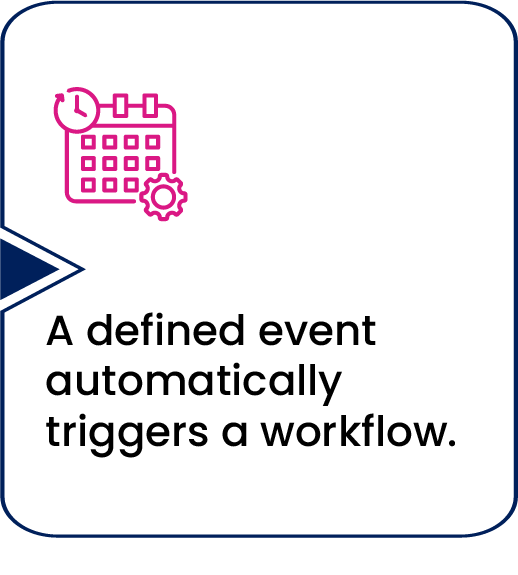
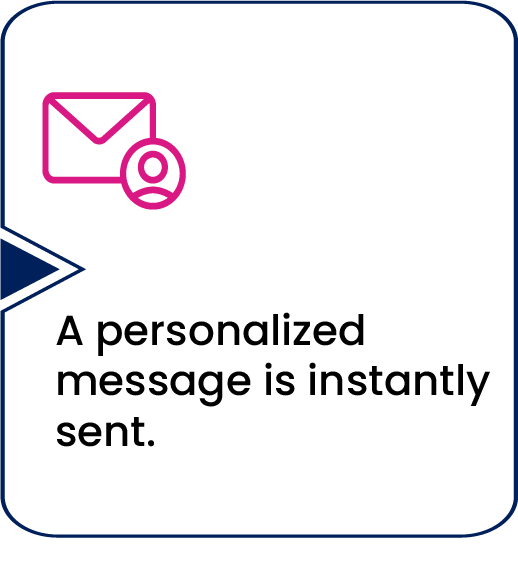
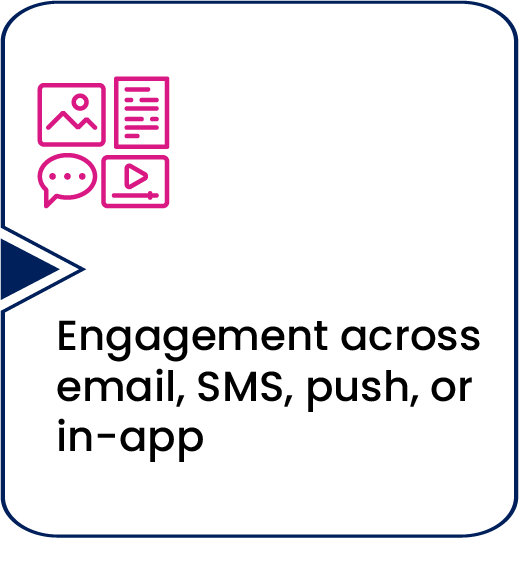
Figure 3: The Event-Driven Talent Engagement Model
However, there is more to it than what meets the eye.
- Application: The Conversation Starter
In a talent community platform, a job application triggers an instant, personalized response with role context and clear next steps instead of silence and guesswork. - Interview: The Guided Experience
Interview scheduling prompts timely reminders, preparation tips, and logistics, keeping candidates informed and ready. - Assignment End: The Continuation Point
As the contract expires, the system surfaces new, relevant opportunities, eliminating the need to start afresh. Each event drives timely engagement, turning recruitment into a continuous process.
From Candidates to Community Members: Talent Pools vs. Talent Communities
The biggest shift is not technological. Its identity based.
A talent pool is a database. It holds profiles, tracks availability, and gets searched when a role opens. It’s passive by design—a reservoir you draw from, not a relationship you maintain. A talent community is something fundamentally different. It’s an ecosystem where candidates receive consistent value, feel recognized over time, and remain connected to an organization even when they’re not actively job-seeking.
The debate around talent pools vs talent communities isn’t just semantic. It’s operational: talent pools are managed; talent communities are cultivated.
In a database model, candidates are records. In a Spotify-style model, candidates are participants in an evolving system. This implies:
- Candidates are not “stored”; they are continuously engaged.
- Candidates are not “reactivated”; they are always part of a journey.
- Candidates are not “segmented” once; they are understood in motion.
This is how organizations transform passive talent pools into thriving recruiting communities.
Here is what that looks like end-to-end:

Monitor Real-time Events: Recognize signals such as signups, app drop-offs, status changes, and inactivity thresholds

Trigger Pre-configured Workflows: Activate workflows that define eligibility, timing, branching rules, and exit criteria

Send Personalized Messages: Generate contextual messages using stage, last action, preferences, role/location, and next-best actions

Deliver Across Channels (email, SMS, push, in-app): Route messages through the most effective channel, with fallback options if delivery fails

Track Responses for Optimization: Measure opens, clicks, replies, conversions, opt-outs, and time-to-action to refine triggers, content, cadence,
Figure 4: Real-Time Candidate Engagement
Real-World Examples of Event-Driven Candidate Engagement
Job Application Submission
The candidate experience within a recruiting community begins as soon as a candidate applies for a job role. For example, if a candidate applies for a warehouse job, an intelligent workflow within a talent community platform sends a personalized confirmation within 60 seconds, outlining the role details, next steps, expected timelines, and recruiter contact information. If no recruiter outreach occurs within 48 hours, the system automatically initiates follow-up actions ensuring responsiveness, sustaining hiring momentum, and strengthening employer branding.
Interview Scheduling
Effective candidate engagement plays a critical role in interview readiness and candidate experience. Once an interview is scheduled in the ATS, it is automatically added to the candidate’s engagement timeline in the talent community platform. A 24-hour pre-interview trigger sends a personalized SMS reminder with critical details including location, parking instructions, and dress code relevant to the role and context. This timely, automated coordination ensures that candidates arrive informed and prepared, leading to fewer no-shows and enabling a smoother interview experience.
Assignment Nearing Completion
Modern talent communities treat assignment completion as a redeployment opportunity, not a reset. When a candidate’s end date approaches, the system treats the final 30-day window as a trigger for action, proactively reaching out with a personalized message highlighting available positions aligned with the candidate’s skills, past assignments, performance history, and location preferences—sent from their recruiter, not a generic inbox. Therefore, the candidates experience being connected to a broader recruiting community instead of uncertainty, while staffing teams fill roles faster without re-sourcing. This leads to higher redeployment rates, faster fills, and reduced cost per hire—without adding recruiter workload.
Dormant Candidates
Candidate inactivity should not be viewed as attrition but as a re-engagement opportunity. If a candidate exhibits 30 days of inactivity, the system automatically initiates a personalized re-engagement campaign with relevant high-paying roles, recent opportunities, and referral incentives according to their profiles. Rather than allowing talent to disengage, the talent community platform proactively brings the candidates back into the ecosystem, reactivating the talent pool, boosting engagement, and optimizing the return on existing recruiting investment.
Technology That Makes Event-Driven Talent Engagement Possible
Technology turns the concept of event-driven talent engagement into a capability. A connected infrastructure detects hiring events, interprets candidate signals, and triggers timely outreach, making engagement proactive, personalized, and scalable in real-time. Automation alone is not sufficient to do this. A modern talent community platform combines ATS integration, behavioral tracking, intelligent workflows, multi-channel communication, and analytics must function together. This leads to a talent engagement model that responds in real time, improves candidate engagement, and helps teams scale high-touch interactions without scaling recruiter effort.
Technology makes the model scalable and effective, not the process alone. The system operates with minimal manual intervention after events and workflows are set up, scaling effortlessly while managing many candidates. The result is a responsive, always-on engagement engine that increases recruiter efficiency and improves candidate experience consistency.
WorkLlama’s Event-Driven Architecture
A talent community is simply not a static candidate database, a newsletter list, or a Slack group. It is a dynamic engagement ecosystem built on continuous value exchange and two-way participation across the entire talent journey.
This is where WorkLLama becomes fundamental, enabling event-driven engagement that replaces static campaigns with real-time, signal-based interactions. It helps organizations transition from managing talent pools to orchestrating continuous candidate relationships that evolve with every interaction.
Hiring milestones such as application, screening, interview, offer, hire, and onboarding; assignment lifecycle moments like first day, weekly check-ins, performance reviews, and assignment completion; engagement signals like logins, profile updates, referrals, and job views; and time-based triggers like interview reminders, shift alerts, or assignment-end outreach are all part of the platform’s structure.
Automated Workflows: Built for Talent, Not Marketing
These events activate automated workflows through a no-code, drag-and-drop orchestration engine featuring conditional logic (if/then rules), multi-step engagement journeys, and integrated A/B testing. These intelligent workflows allow teams to improve candidate engagement while continuously optimizing messaging and conversion without significant engineering effort.
Multi-Channel Delivery: Right Channel, Right Moment
Personalized recruiter-led emails, two-way SMS conversations, push notifications, and in-app messaging form a unified multi-channel layer—ensuring communication reaches candidates through the right channel, at the right moment, with the right context. The system also tracks engagement history across all touchpoints, enabling consistency regardless of which recruiter picks up the conversation.
The result is a scalable, always-on talent community platform where every candidate interaction is event-triggered, context-aware, and quantifiable, transforming communities from passive audiences into active, continuously engaged talent ecosystems.
From Talent Databases to Living Talent Communities: The Spotify Effect on Talent Engagement
Organizations must reconsider talent engagement as an ongoing, event-driven experience rather than a series of separate recruiting campaigns — much like how Spotify’s Discover Weekly replaced the static playlist with something that learns, adapts, and stays relevant week after week. The shift from managing candidates to nurturing talent communities is not incremental. It’s foundational. From one-time outreach to ongoing engagement, from reactive hiring to always-on talent ecosystems. In this model, every interaction becomes an opportunity to build trust, deepen belonging, and sustain a relationship that outlasts any single role.
The future of hiring is not about finding talent when a role opens. It is about building relationships through scalable candidate engagement and intelligent talent community building. That is exactly where WorkLLama leads.
By enabling event-driven, always-on engagement, WorkLLama helps organizations transform disconnected candidate records into dynamic talent communities — where every signal is heard, every moment is an opportunity, and no relationship starts from zero.

