
The False Trade-Off Between Candidate and Recruiter Experience
Talent acquisition has long been shaped by a narrative: “Candidate experience (CX) is everything” (It mirrors the popular marketing cliché: “Customer is king”).
Inspiring on the surface—until you look behind the scenes.
Behind the scenes, recruiters struggle with fragmented systems, manual tasks, and overwhelming requisition volumes. The cost goes beyond fatigue to include emotional and ethical considerations. Recruiters often know candidates are waiting for updates, yet lack the time, tools, or system support to respond. The divide causes guilt, frustration, and an ongoing sense of professional compromise.
In this environment, “candidate experience” becomes an unrealistic expectation.
There is an inbuilt paradox in hiring. Recruiters can meet time-to-fill targets while delivering poor candidate experience. Metrics reward speed and closure, while candidates experience silence and uncertainty. Recruiters are rarely tested on responsiveness, which is the strongest driver of candidate’s confidence. The result is dashboard success and real-world failure.
This gap is exacerbated by hiring systems themselves. Most ATS platforms are designed to track, not communicate. Tracking status and compliance is not the same as timely human interaction. Tracking offers control; experience fosters continuity. Confusing the two is where candidate experience strategies fail. A poor recruiter experience always leads to a poor candidate experience. They rise or fall together.
The competitive edge lies in hiring workflow efficiency—systems where recruiter and candidate journeys reinforce each other instead of competing for attention.
Understanding the Two Experiences (And Why Both Matter)
Defining Candidate Experience
Candidate experience is neither a soft metric nor just a user-friendly career website. It is the complete journey—how talent discovers, evaluates, and engages with you before deciding whether to join (or rejoin) your organization. Every touchpoint is important, including job-board impressions, application flow, interviews, offer calls, and even the silence from recruiters that too many candidates continue to endure.
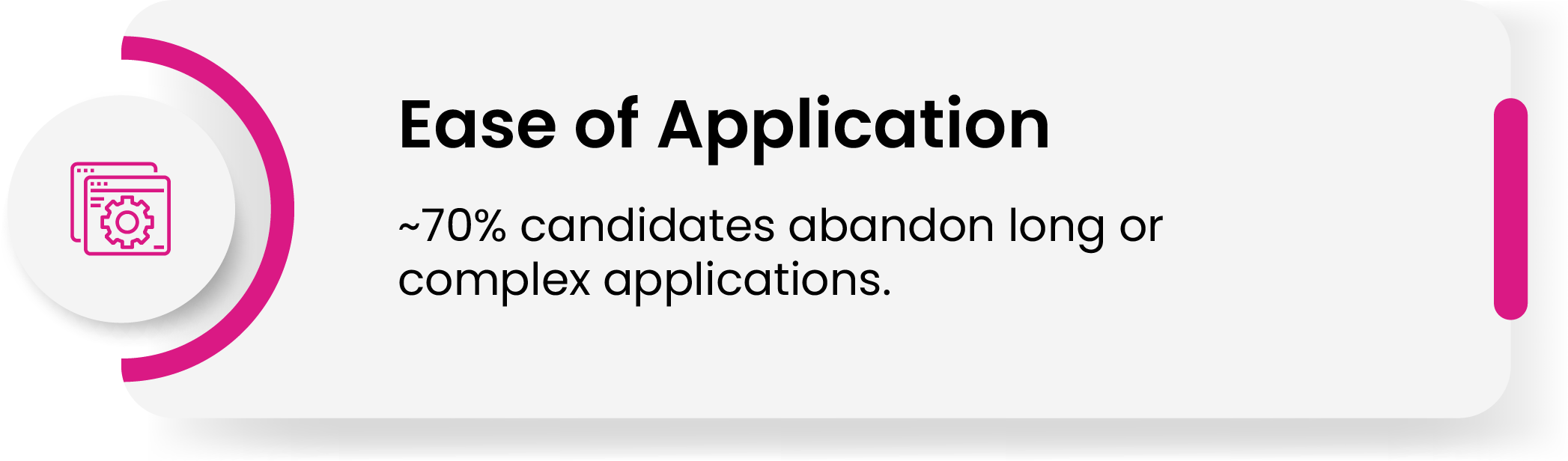
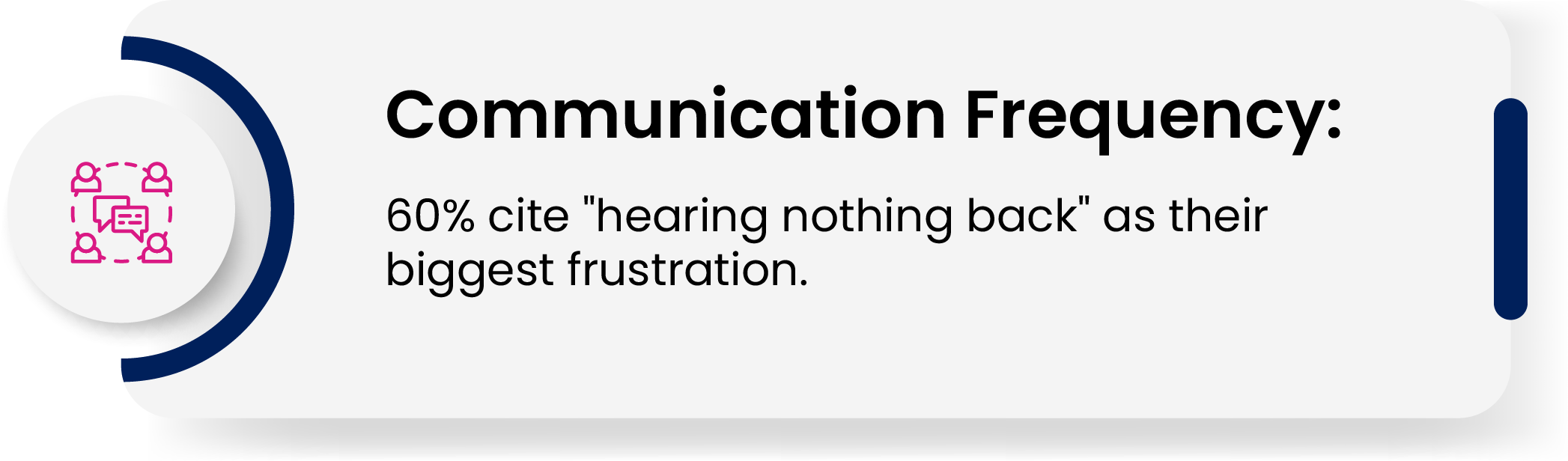

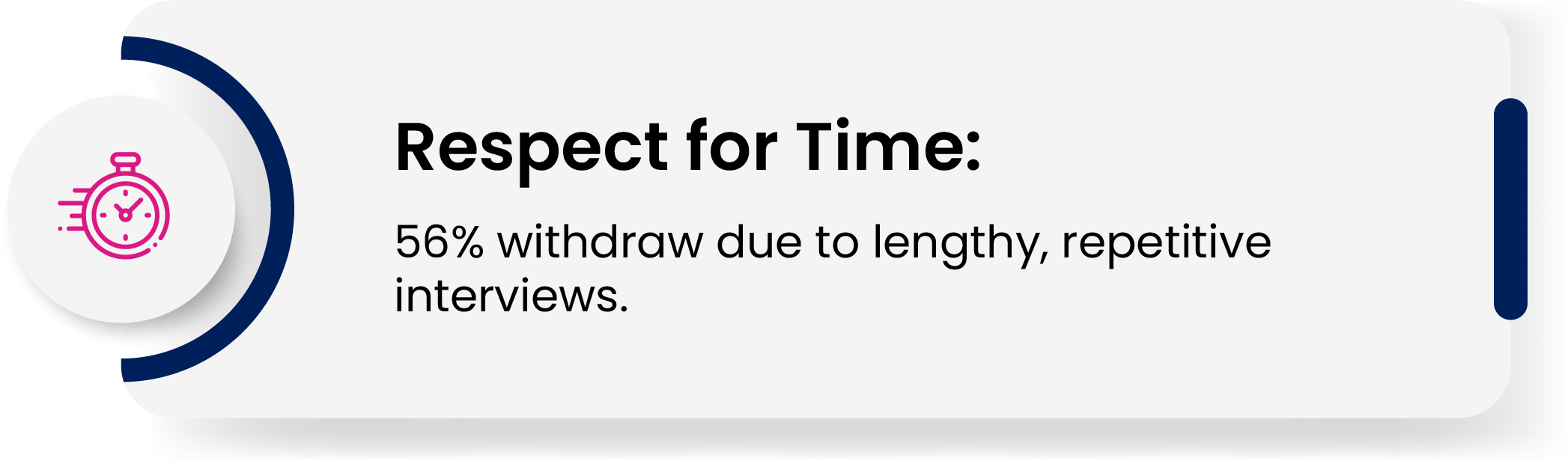
Figure 1: Key Factors Impacting Candidate Experience
These are not UX concerns, they are experience issues that determine how candidates perceive your brand.
Why It Is a Competitive Differentiator
Candidates today behave like consumers, they compare, research, and expect speed and clarity.
- 75% consider employer reputation before applying
- 50% decline offers after a bad experience
- 72% share negative experiences publicly
Candidate experience now determines whether you attract or lose top talent.
The Business Case
A strong candidate experience enhances every quantifiable outcome:
- 30% increased offer acceptance
- 2X more referrals, even from rejected candidates
- 40% of candidates are current/potential customers; therefore, negatives experiences impact revenue and brand confidence
Candidate experience is no longer a talent acquisition detail, but a business lever as well.
Where Most Companies Still Overfocus
Many organizations prioritize surface-level investments:
- Better career portals
- Streamlined interview scheduling
- Improved rejection emails
Useful, but far from sufficient.
However, the real driver of candidate experience is recruiters’ workload, burnout, and broken workflows.
The Overlooked Half: Defining Recruiter Experience
For years, candidate experience dominated talent conversations while recruiter experience was on the periphery—unmeasured, misunderstood, and rarely purposeful.

Tools Utilized

Workflows

Autonomy & Support Received

Allocation of Time Between Strategy and Noise
Figure 2: Recruiter Experience – Critical Elements
The above-mentioned factors determine whether recruiters act as strategic advisors or as human middleware holding fragmented systems together.
Today, most recruiters operate in survival mode, switching between 4–7 systems, re-entering data, providing manual status updates, and managing overloaded requisitions.
Why is this overlooked?
A common assumption: “Recruiters are professionals—they’ll figure it out.” They do—but at an extreme cost: burnout, attrition, lost productivity, and inconsistent candidate treatment caused by operational strain, not lack of skill.
The truth is simple: recruiter experience is candidate experience—just upstream.
Slow replies, generic communications, rushed interviews, and inconsistent follow-ups are all signs of faulty workflows, not poor intent. To improve candidate experience, organizations must address the source: the recruiter journey itself.
Improve recruiter experience, and the candidate experience will improve organically. Ignore it, and no amount of branding or surveys will close the gap.
The Symbiotic Relationship: How Each Drives the Other
How Broken Recruiter Workflows Hurt CX
Recruiter and candidate experience are not two separate journeys — they’re one integrated system.
When recruiter workflows break, the damage cascades fast:
Overwhelmed Recruiters → Slow Responses → Frustrated Candidates → A Weakened Employer Brand → Harder-to-fill Roles → Even More Overwhelmed Recruiters.
This spiral is overlooked—until it affects hiring outcomes.
The Communication Breakdown
Communication is the first casualty when workloads exceed system capacity.
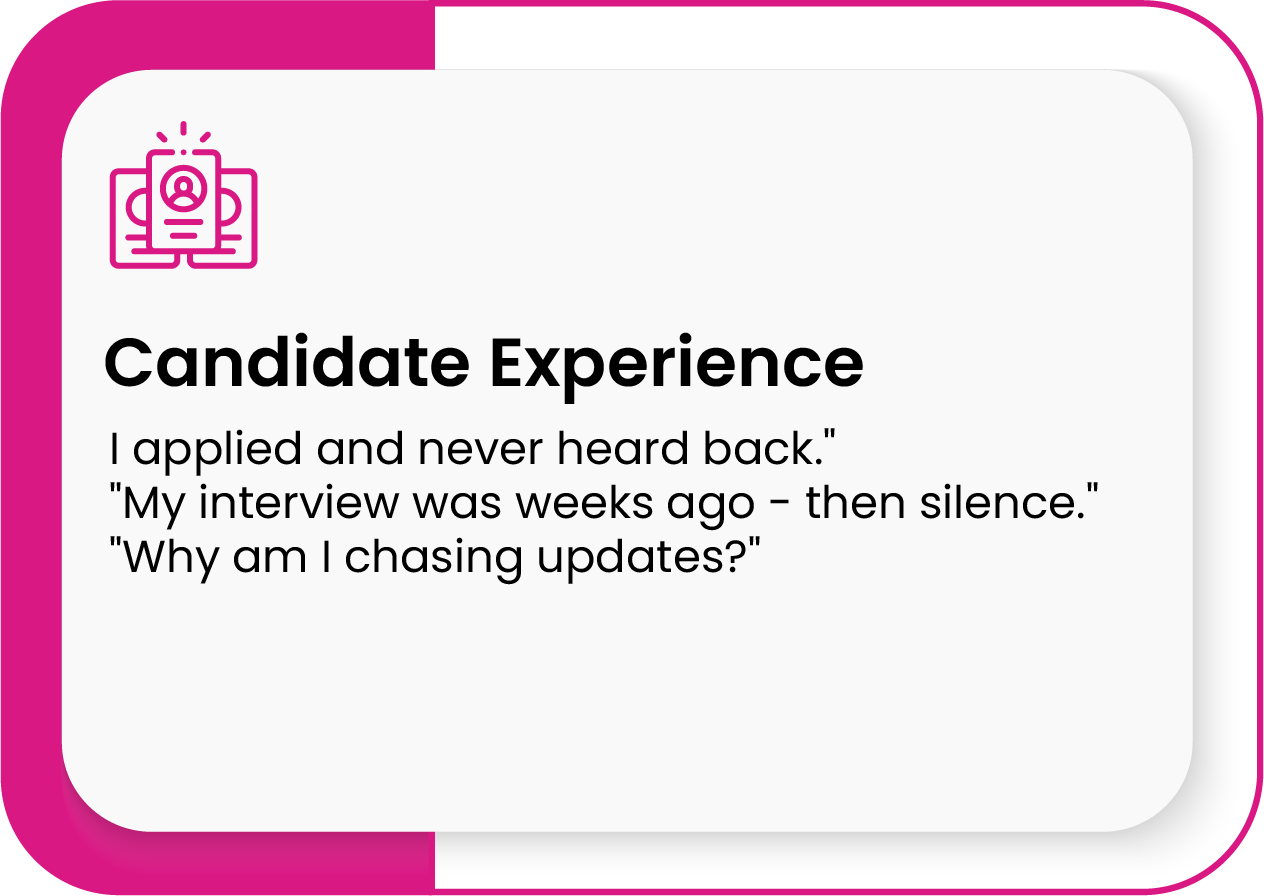
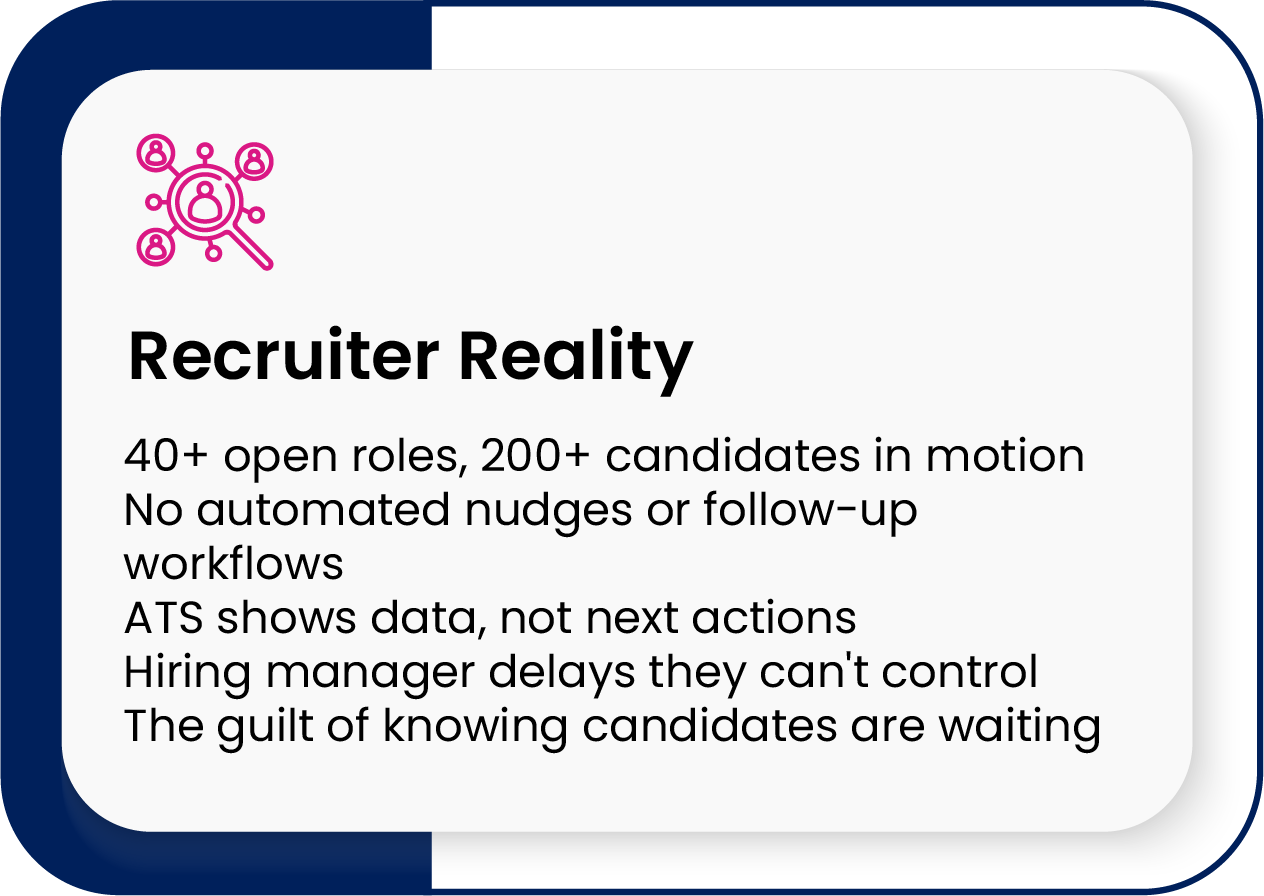
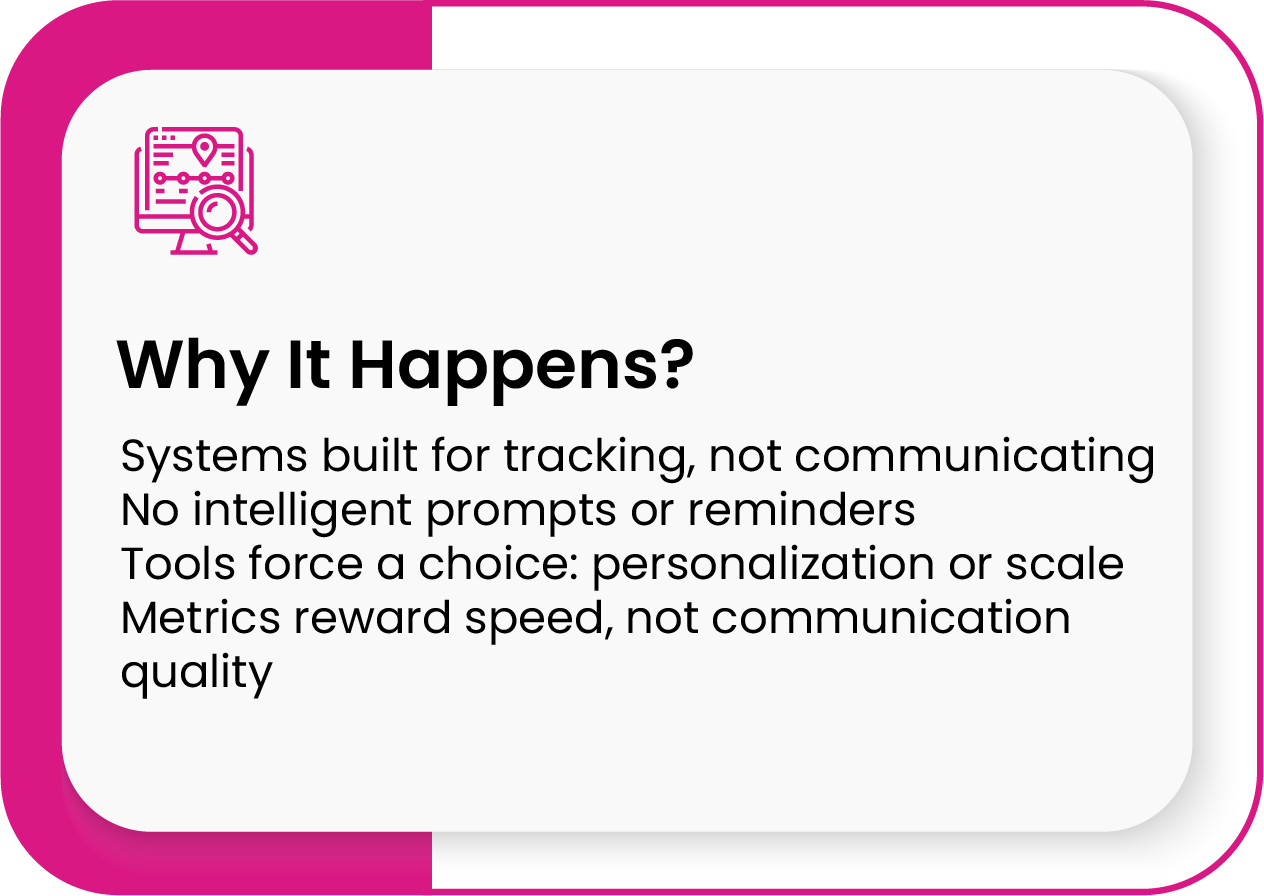
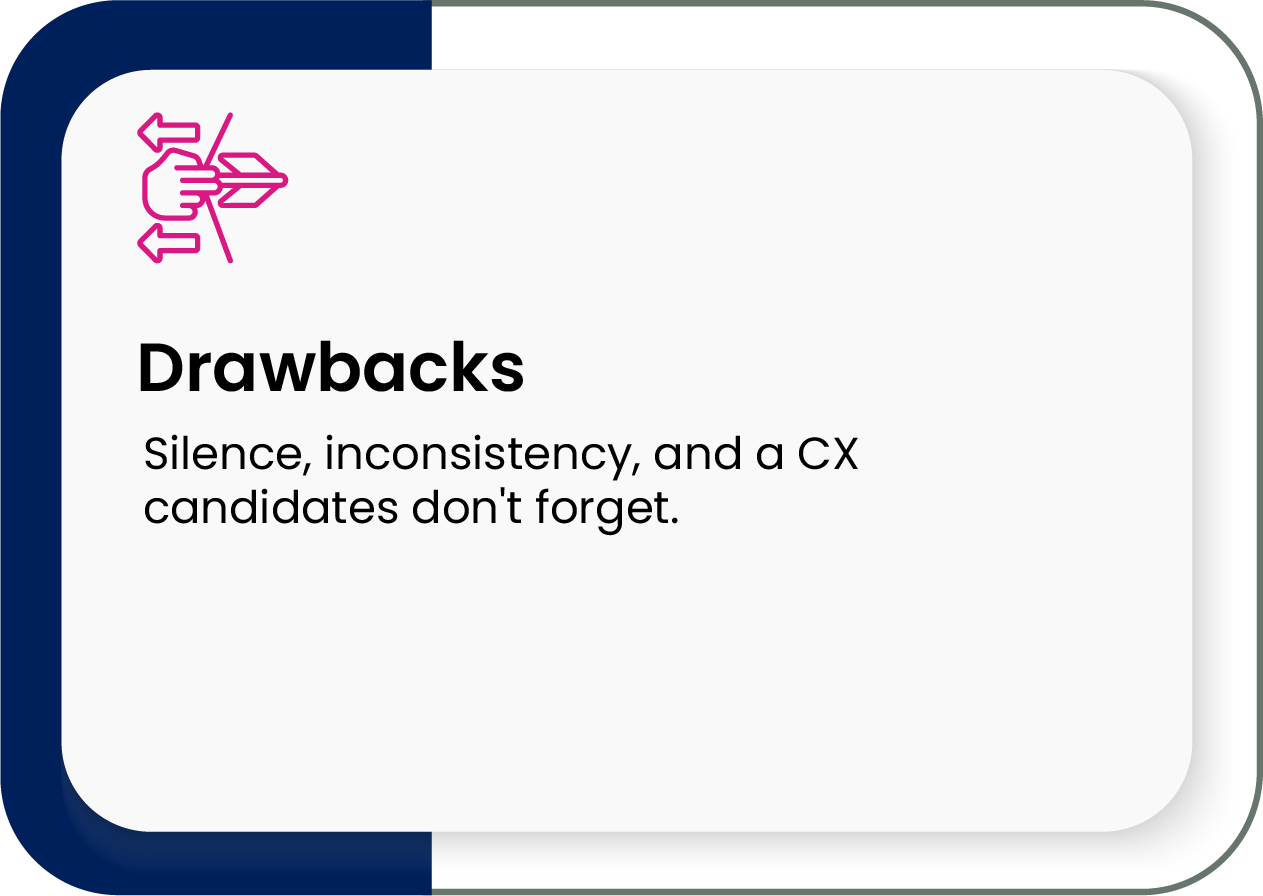
Figure 3: The Communication Breakdown
The Broken Application Process
The experience fails candidates long before a recruiter even speaks to them.
| Candidate Experience | Recruiter Reality | Root Cause |
| Uploading a résumé and retyping the same info | Clunky HR-designed flows | Systems prioritize compliance over experience |
| Long, irrelevant assessments | Messy or incomplete data | Disconnected tools for candidates and recruiters |
| Forced account creation | Required fields that cannot be changed | Integration gaps that cause duplicate entries |
| Mobile applications that fail halfway | No control to fix anything | No feedback loop from recruiter pain to system improvements |
Both candidates and recruiters struggle, and nobody wins.
The Scheduling Chaos
If anything pushes candidates over the edge, it’s the interviews.
| SITUATION | BEFORE | AFTER | IMPACT |
| Candidate Experience | A single interview requires 6-10 emails, 2-3 calendar checks, and manual follow-ups. Delay or reschedule resets the loop-often leaving candidates waiting days without clarity. | Al-driven scheduling provides available slots instantly, confirms participants, shares prep and links automatically, and adjusts in real time if changes occur- without recruiter intervention. | Hours of recruiter time saved per role; candidates receive confirmation and context within minutes, not days. |
| Communication Breakdown | Recruiters track candidates in an ATS but communicate through inboxes, spreadsheets, and reminders. Updates fall through gaps-especially at scale resulting in silence candidates interpret as rejection. | Communication is embedded in the workflow. Status changes trigger timely, consistent updates automatically, with recruiters stepping in only where judgment is required. | Responsiveness improves without increasing recruiter workload; candidate trust increases without manual effort. |
| Broken Application Flow | Candidates complete long, repetitive applications, lose progress on mobile, or never receive confirmation. Recruiters see drop-off but lack insight into why it happens. | Mobile-first, guided applications adapt to role and candidate type, confirm receipt instantly, and surface drop-off signals early. | Higher application completion rates and earlier visibility into funnel risk. |
| Recruiter Workload | A recruiter managing 30-40 open roles spends 40- 60% of their time on coordination: scheduling, follow-ups, updates, and status checks. | Automation absorbs routine coordination, reducing administrative work to <20%, freeing recruiters to focus on assessment, stakeholder alignment, and candidate conversations. | Productivity rises without increasing headcount; burnout drops as ethical friction is removed. |
When scheduling fails, the candidate loses confidence before the interview starts.
The Hidden Cost: Reputation & Retention
Broken workflows affect both experience and trust.
- Candidates interact both publicly and privately
- Top talent leaves early
- Offer acceptance decreases
- Recruiter fatigue increases
- Pipelines weaken and positions take longer to fill
Inefficiency creates a loop that depletes both brand equity and workforce morale.
The Recruiter Experience Crisis (That Nobody Talks About)
The Tool Overload Problem
- A Crowded Tech Stack with a Hidden Cost: Recruiters manage ATS, sourcing tools, schedulers, communication platforms, assessments, background checks, and HRIS—but no one truly talks to each other. Data breaks, integrations fail, and recruiters become the “human API,” copying and pasting across platforms all day.
- The System-Switching Tax: With 20–30 active requisitions and hundreds of candidates, context switching reduces focus and increases errors. Dashboards promise visibility, but do not streamline work. Manual efforts dominate.
- The Impact: Slower processes, more errors, missed follow-ups, broken communication, and negative candidate experience.
The Workflow Inefficiency Tax
Admin Overload Replaces Real Recruitment: Recruiters spend most of their time on data entry, tracking, scheduling, chasing feedback—tasks that could be automated. The “talent advisor” becomes a “data-entry clerk,” and expanding the team only multiplies the inefficiencies.
Metrics & Accountability Misalignment
Measured on Speed — Not on Experience: Organizations focus on time-to-fill and requisition load, not communication quality or process consistency. This helps prioritize speed over candidate experience. Without feedback loops, CX issues persist because no one is accountable for resolving them.
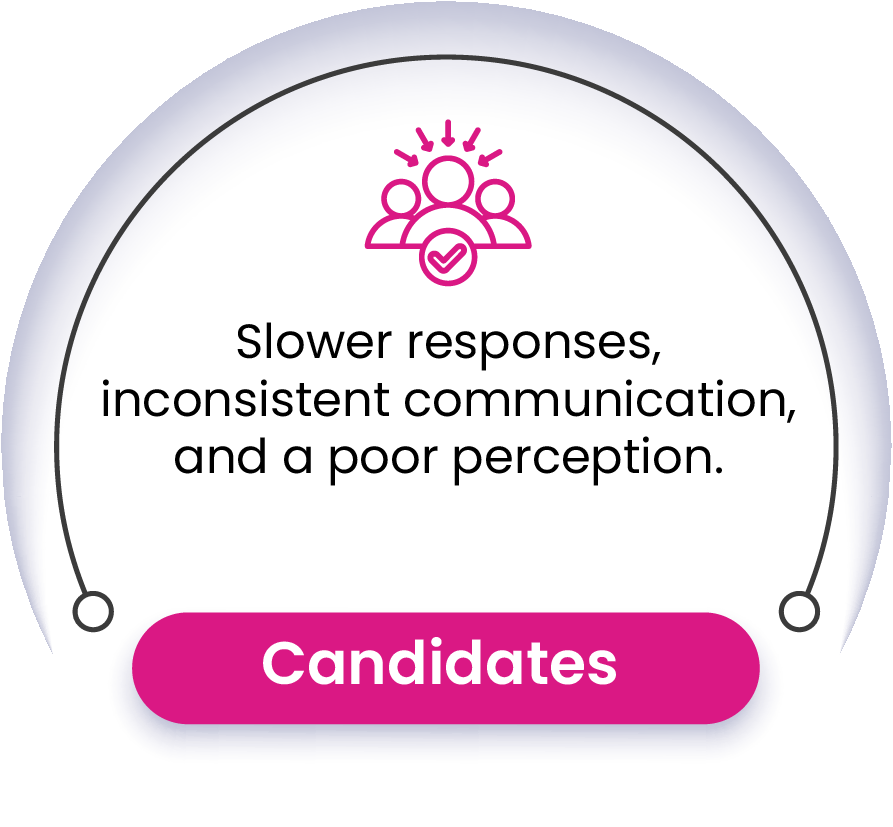
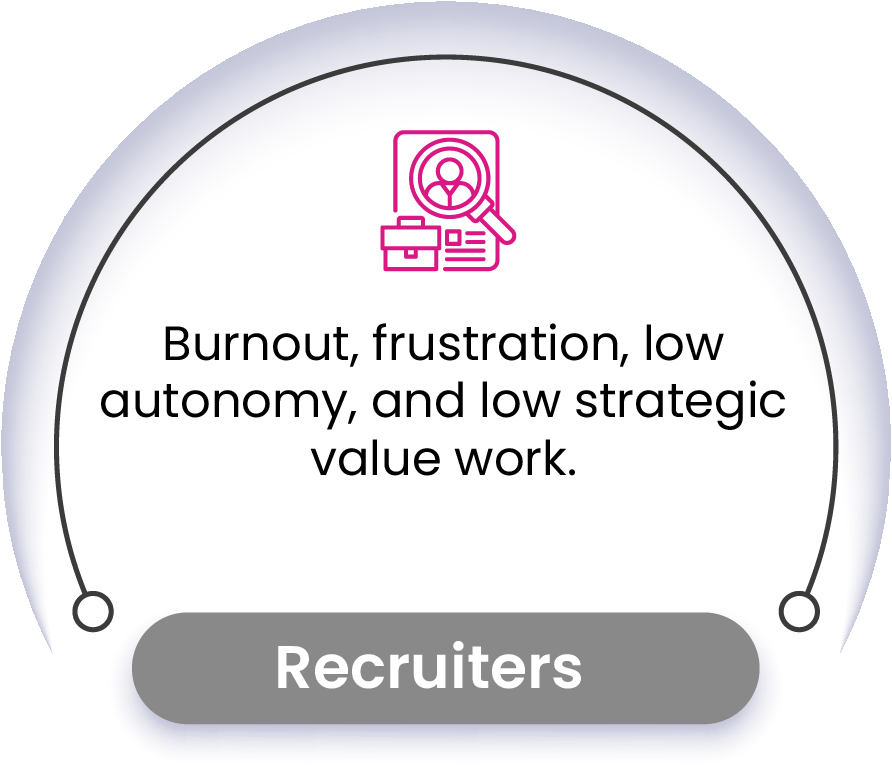
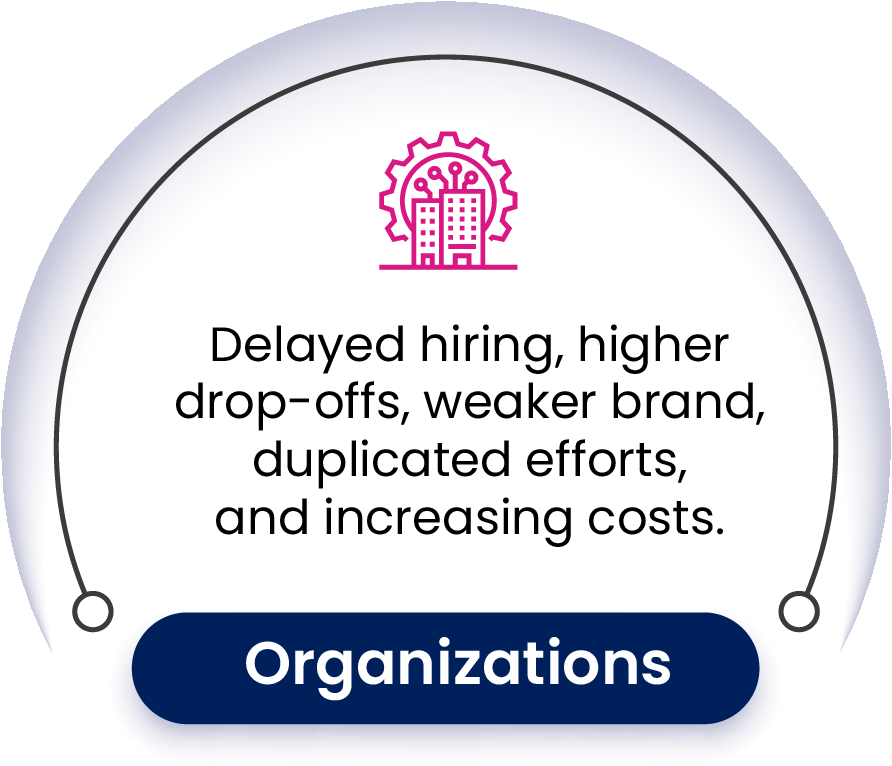
Figure 5: The ‘Experience’ Crisis: Why It Matters?
The Root Cause
Recruiting technology was designed for compliance and data tracking, not human experience. Candidate-facing and recruiter-facing tools rarely integrate. The mismatch keeps the inefficiency loop going.

Unify Tech Stack:
Fewer tools, better integrations.

Automate Admin Work:
Scheduling, parsing, reminders, feedback.

Measure Right Things:
Candidate satisfaction, recruiter workload, communication quality, process efficiency.

Create Feedback Loops:
Between candidates, recruiters, and TA leaders.

Redesign Work Rhythms:
Reduce context-switching and enable deep work.

Reposition recruiters as talent advisors,
not system operators.
Figure 6: Steps to Tackle the ‘Experience’ Crisis
Recruitment Process Optimization: The Integration Imperative Optimizing Both Experiences Simultaneously
The Upward Spiral
Efficient Tools → Faster Recruiter Actions → Quicker Candidate Responses → Stronger Talent Pools → Easier Hires → Increased Recruiter Capacity.
When systems interact, every improvement compounds.
Speed for Recruiters = Speed for Candidates
- Automation boosts both sides: Instant acknowledgments, status updates, and interview confirmations.
- Reduced system-switching leads to shorter wait times for candidates.
- One-click recruiter actions drive same-day candidate responses.
- Remove recruiter friction and improve candidate experience—always.

Candidates desire personalized communication; recruiters lack time.

Templates alone feel generic.

AI-assisted personalization drafts contextual, role-specific messages for recruiter review.
Candidates desire personalized communication; recruiters lack time.

Recruiters shift from writing to editing and relationship-building.

Result: High-quality, human communication without added workload.
Figure 7: Need for Smart Tools
Data Visibility Benefits Everyone
- Recruiter dashboards highlight priority activities, at-risk candidates, and bottlenecks.
- Candidate portals reduce “Where’s my application?” inquiries.
- Real-time visibility reduces candidate anxiety and recruiter inbox load.
- Analytics identify drop-off points and delays; surveys trigger workflow changes.
- Predictive intelligence flags who need immediate attention

Candidates increasingly apply, respond, and schedule via mobile.

Mobile approvals, quick reviews, notes, and communication.

On-the-go actions enable real-time responses.

Faster cycles without tying recruiters to a desk—with guardrails to prevent burnout.
Figure 8: Benefits of ‘Mobile-First’
Optimizing recruiters helps delight candidates—and win competitive talent.
AI: The Link Between Recruiter and Candidate Experience
Most organizations optimize either candidate experience or recruiter productivity. Few recognize they are inseparable. When designed correctly, AI becomes the bridge—enhancing hiring workflow efficiency without replacing human judgment.
The Recruiter Experience
AI strengthens recruiter efficiency without impacting human judgment.
- Automates sourcing, screening, and scheduling to reduce manual workload
- Enables skills-based hiring through structured, consistent evaluation
- Provides predictive insights on pipeline risk and hire quality
- Reduces bias by standardizing assessments and decision signals
As a result, recruiters shift from being process managers to strategic talent advisors.
Candidate Experience
AI addresses the fundamental flaws of hiring: delays, silence, and inconsistencies.
- Accelerates screening, scheduling, and feedback cycles
- Ensures consistent, clear communication at every stage
- Personalizes engagement at scale without introducing bias
Candidates experience speed, fairness, and transparency—not because recruiters are working harder, but because systems are working smarter.
AI does not just accelerate hiring; it realigns hiring.
AI handles scale, and coordination. Humans deliver judgment, trust, and connection. When designed correctly, recruiter and candidate experience reinforce each other —through the same system, at the same time.
Building the Dual-Optimized Recruitment Process
Dual-Optimization: The New Talent Advantage
Speed-only systems frustrate candidates; experience-only systems overwhelm recruiters. The future is dual-optimized systems—workflows designed to serve both.
This model requires:
(1) Tech foundation that elevates both experiences
(2) Integration that unifies every touchpoint
What Both Sides Need
Candidates: A Consumer-Grade Journey
Clarity, convenience, and control:
- Mobile-friendly applications
- Self-service scheduling
- Transparent status updates
- Simple communication channels
- Accessible roles and company insights
Recruiters: A High-Efficiency Workspace
Simplicity without tool overload.
- One unified workspace
- Automation for routine updates
- AI-driven sourcing and candidate matching
- One-click actions for emails and scheduling
- Priority dashboards
- Built-in collaboration tools
When recruiters work faster, candidates feel the impact immediately.
Where Dual Optimization Comes Alive
Bi-Directional Data Flow
Recruiter updates are reflected instantly in candidate portals; candidate actions trigger recruiter workflows. No silos, no delays.
Smart, Trigger-based Workflows
- Candidate completes an action → Recruiter notified
- Delays exceed thresholds → System prompts next steps
- Interview booked → Prep materials auto sent
Unified Communication
Real-time (chat/SMS) and asynchronous (email/portal) updates, all centralized.
Shared Analytics
Visibility into satisfaction, workload, drop-offs, bottlenecks, and response times.
Continuous Dual Feedback
Both sides shape ongoing workflow improvements, removing friction in real time.
The Outcome: A System Where Everyone Wins
Dual-optimized hiring enables:
- Faster hiring cycles
- Consistent communication
- Higher candidate satisfaction
- Less recruiter burnout
- Better alignment and stronger hires
When designed for both recruiters and candidates, hiring becomes a high-performance system—not a trade-off.
How WorkLLama Enables Hiring Workflow Efficiency
Hiring doesn’t fail because of lack of tools—but because those tools don’t work well together.
Recruiters manage multiple disconnected systems for monitoring, communication, scheduling, referrals, and nurturing. The result is delay, misalignment, recruiter fatigue, and candidate drop-off.
WorkLLama solves this fragmentation. It is not just another tool—it’s the layer that unifies the talent ecosystem. By bringing ATS, communication, scheduling, referrals, and nurturing into one platform, it replaces disjointed workflows with a single, collaborative workspace—allowing recruiters to focus on human connection.
Its AI adds intelligence, not noise: identifying the best-fit talent, automating conversations, coordinating schedules, and triggering next steps. Routine work is integrated into workflows, allowing personalization to scale without additional effort.
Real-time collaboration aligns recruiters, hiring managers, operations, and candidates in a single system. Bottlenecks appear early, decisions move faster, and miscommunication decreases.
A mobile-first design expedites the hiring process—candidates stay informed, and recruiters respond faster.
The result:
- Higher recruiter productivity, less burnout
- Improved candidate communication
- Aligned hiring teams
- Shorter cycles, better hires
- Scalability across full-time, contract, and shift hiring
WorkLLama doesn’t add tools to workflows—it connects the journey.
Integrated. Intelligent. Human-centric.
Great Experiences Do Not Compete—They Compound
Recruiter and candidate experience are not opposites—they complement each other. They are mutually reinforcing outcomes of recruitment process optimization and hiring workflow efficiency.
Simplify workflows and automate the routine, and recruiters engage more meaningfully. Create a seamless candidate journey, and recruiters gain clearer data, better conversations, and stronger outcomes.
Great hiring experiences are not built at isolated touchpoints, they are designed into the workflow. When systems are connected and intuitive, efficiency gives way to empathy.
The best hiring strategy is simple: remove friction so people can show up human. Let technology manage the noise and let relationships do the work.

